

 Search
Release Date: 29-09-
Asian Corporate Training Tour Across Three Regions
Over the past few months, apart from being busy with property handovers, I have also been tied up with organizing company training. While some people go on an Asian concert tour, I’ve been running an Asian training tour. What’s more, while most companies usually hire external trainers to take the lead, I believe external trainers may not truly understand our operations. In the end, I decided to take matters into my own hands and do it myself.
I used to conduct training sessions for our sales team frequently, but with my recent busy schedule, the Hong Kong office hasn't had training in a long time, and the Japan and Singapore offices had never done any. That’s why I chose Osaka as my first stop. Although FMI has been established in Japan for many years, it used to be on a smaller scale—back when we only had a team of five or six, we had plenty of opportunities to eat and chat together. Now, with the team growing to forty or fifty people, I can't possibly know everyone. Sometimes, when taking the elevator at the office, I have no idea if the person in front of me is an employee, and I can only guess they are by their nervous expression. After all, Japanese corporate culture has a strong sense of hierarchy, and employees tend to feel uneasy when they see the boss. I have always wanted to break down that barrier.
A good training program requires meticulous planning. My first step was to invite a "master" out of retirement. This reclusive master is actually my cousin, who was a teacher trainer before retiring and also understands how FMI operates. After much badgering and coercion from me, my cousin finally agreed to help. He first asked me: What do you hope everyone will take away from each session? I realized that the offices in Japan, Singapore, and Hong Kong are completely different. In Japan, we recently integrated COH Global Manager and PikaPika Cleaning Services, and the team members are relatively new. I want them to understand that their words and actions have a huge impact on the company—something as minor as a stray hair or a piece of trash can lead to serious consequences. Our operations are interconnected, and I want colleagues to understand the work of other departments. For example, if the design team chooses pure white flooring, it becomes an absolute nightmare for the cleaning team. I want the Japanese team to understand that every single role is indispensable, so I required the entire company—from top management down to receptionists—to participate, followed by a dinner gathering so colleagues have a chance to get to know one another.
The entire training content was crafted hands-on by my cousin and me. We utilized AI to help design tailor-made content; for instance, a few days before the training, we had colleagues complete a MBTI questionnaire, as I believe understanding everyone's personality is key to assigning the most suitable tasks. All our content was kept strictly confidential, and I made the PowerPoint presentations myself, so even the management team didn't know the content in advance, ensuring the training achieved the fairest and most authentic results.
As for the Singapore office, it is primarily sales-driven. The local team is smaller and their goals are quite aligned—mainly focusing on increasing sales performance, employee accountability, and team spirit, making the training planning relatively straightforward.
The trickiest part was the grand finale: the Hong Kong office. Because Hong Kong is our headquarters and has been established the longest, colleagues know each other best. Many have been here for eight or ten years, and even the newer ones have three to five years of experience, giving them a solid understanding of the company. This has both pros and cons: new colleagues generally have more drive, while long-term partners have better chemistry. How do we strike a balance? Furthermore, Hong Kong has multiple departments including administration, sales, accounting, and marketing, all with different scopes of work. How do we set a common theme? Though it was a tough challenge, the harder it is, the more important it is to do it right. To mark the occasion, we spared no expense: last week, we suspended normal business for a day, and the entire team spent from 10 AM to 6 PM at a hotel conference hall for the training session. As for the specific content of the training? I’ll keep that as a suspense and share it with everyone later.
After a full day of intensive training, I hope our Hong Kong colleagues have found inspiration to do even better in the future.
Author
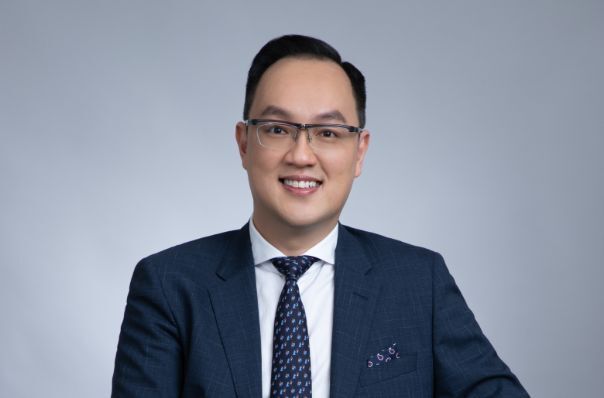
Amous Lee
The CEO and Partner of FMI Investment possesses over 24 years of extensive experience in international property investment. Throughout his 24-year career, he has been actively involved in project consultancy and marketing for multiple listed developers, successfully transacting and managing global properties valued at over USD 8 billion. In addition, he is a member of the Australian Institute of Quantity Surveyors (AIQS), as well as a member and former Secretary General of the Australian Institute of Building (AIB).
YOU MAY ALSO LIKE…